
Templates are starting points, not finished funnels. Every template ships
with placeholder content that you replace with your own. Follow
Personalize your template.
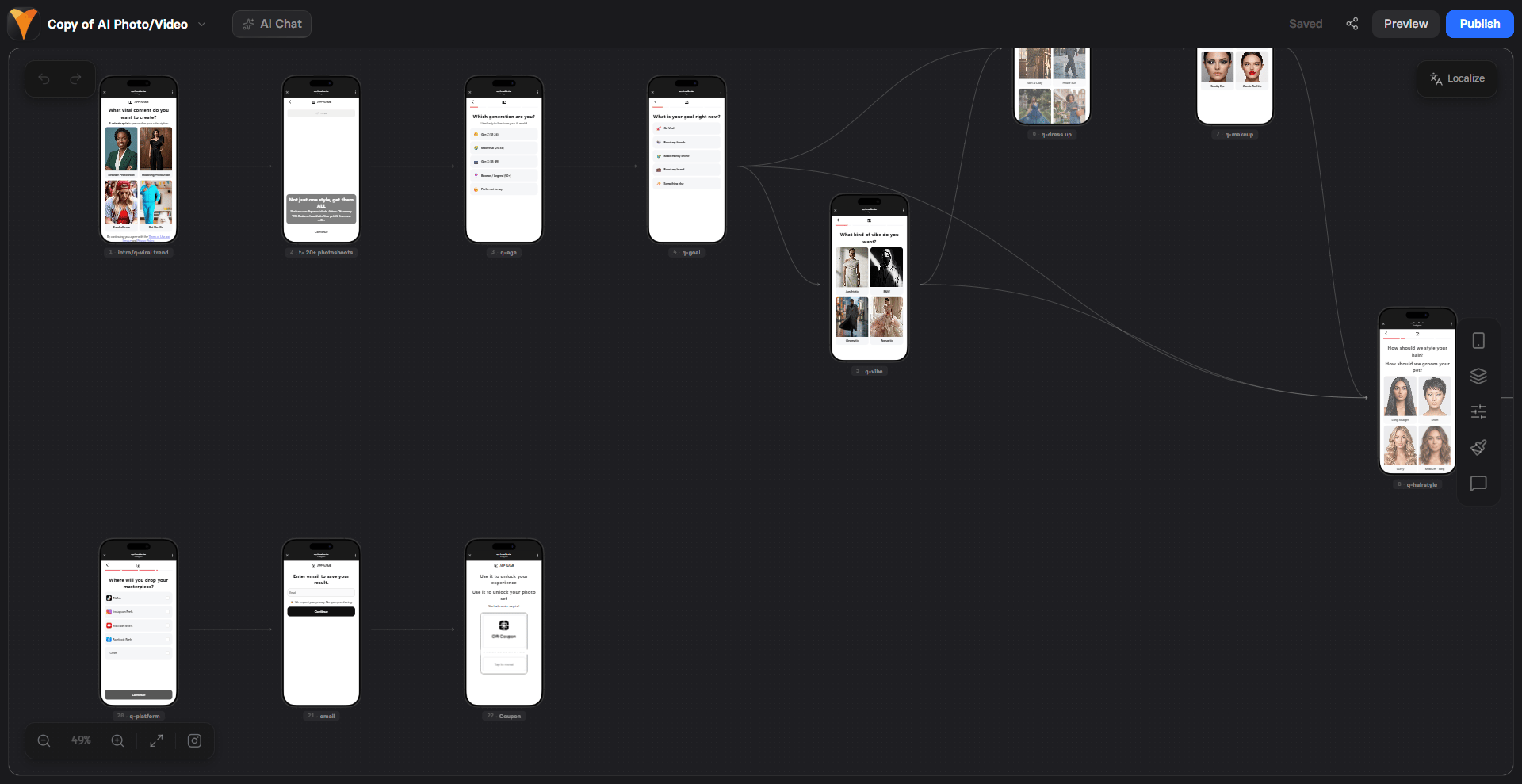
Templates library
Templates are divided the same way funnels are. The funnel type you start from, Acquisition or Cancellation on the Funnels page, decides which templates the gallery offers.- Acquisition
- Cancellation
Templates modeled on high-converting funnels across popular niches:
- AI Learning
- AI Photo/Video
- Astrology
- Mental Well-Being
- Nutrition: Meal Plan
- Parenting
- Relationship/Dating
- Self-Growth
Use templates
1
Start funnel creation
Go to the Funnels page and click
New funnel.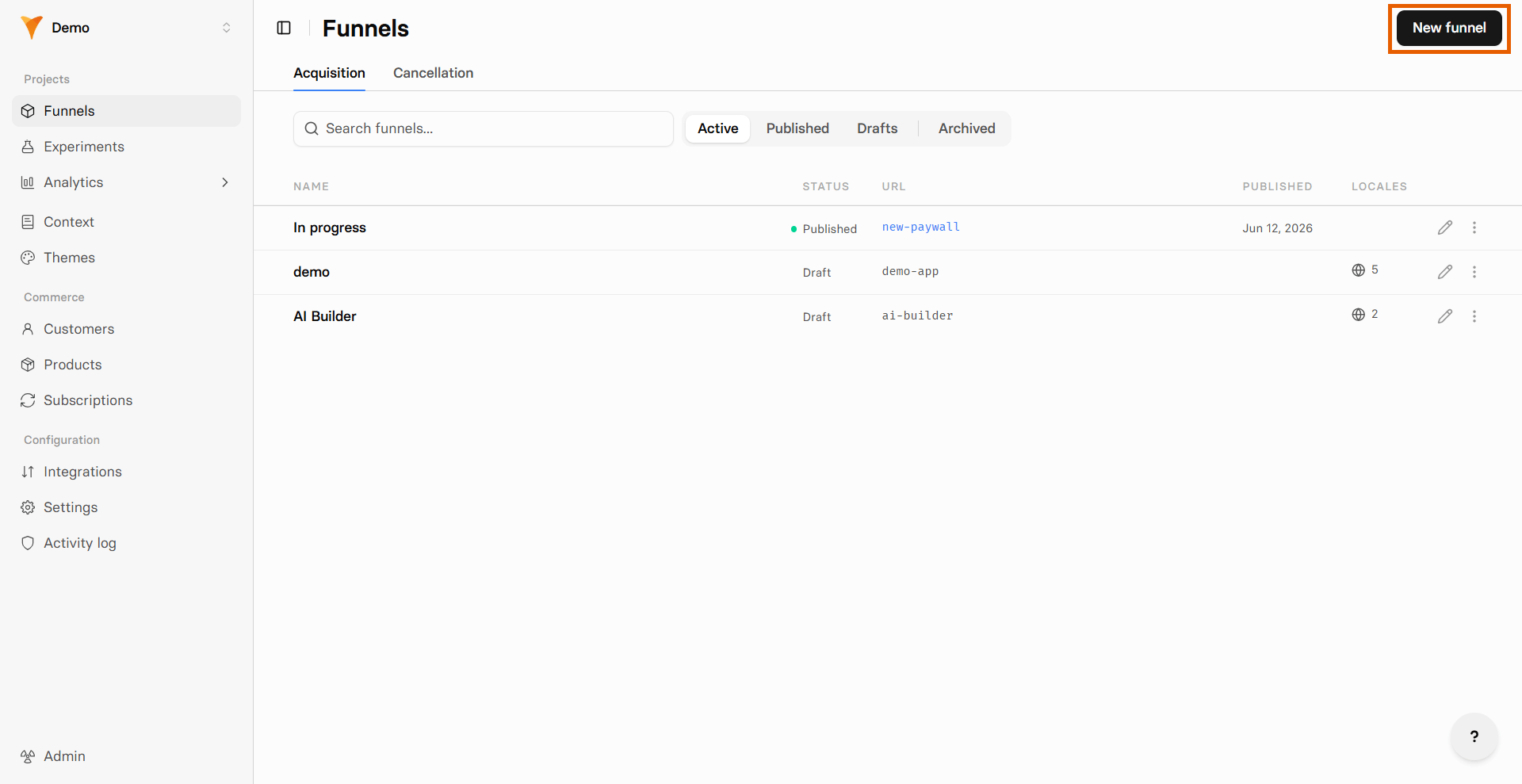
2
Pick a template
Click Use a template and select a template from the library.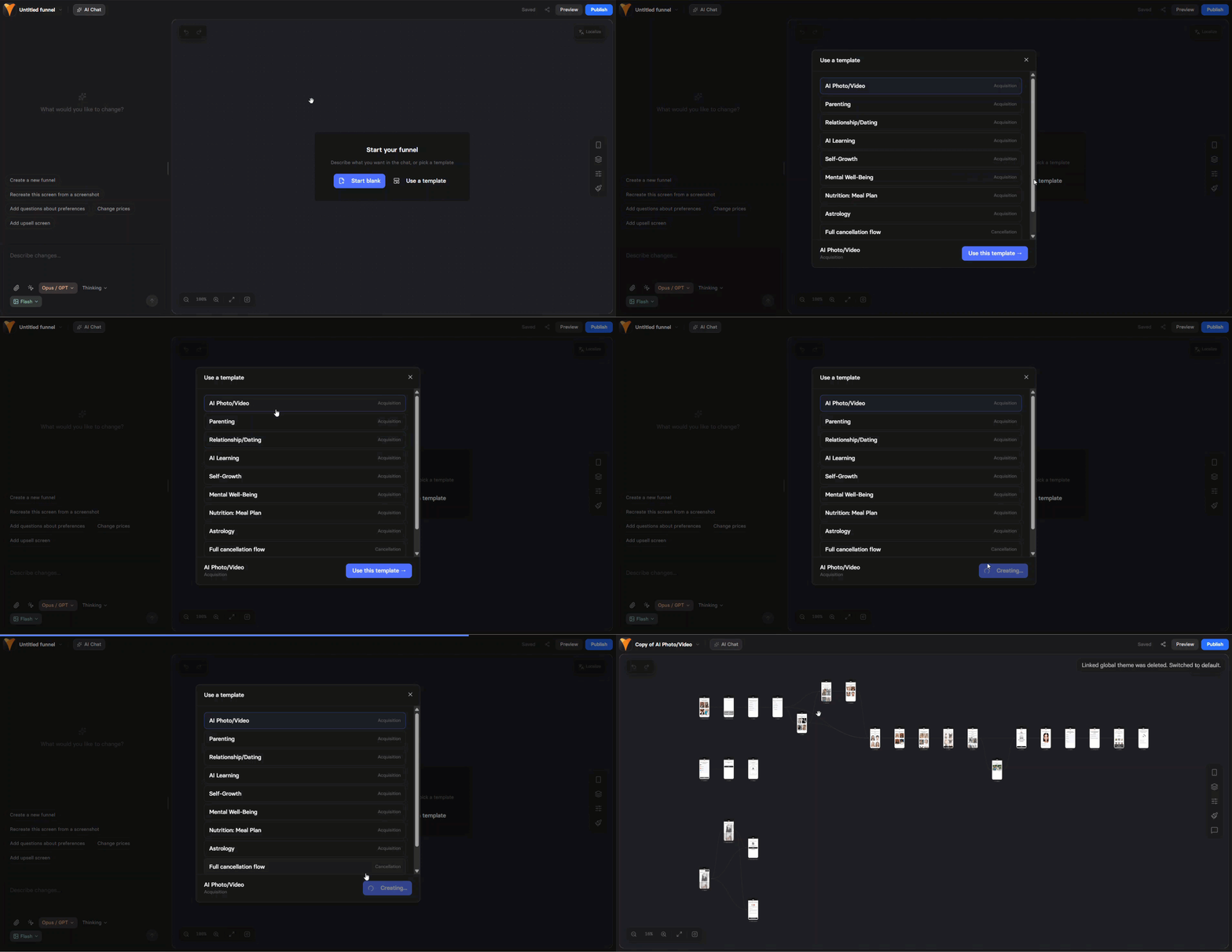
3
Personalize it
Replace the template’s placeholder content with your own before you
publish: legal links, images, social proof, and paywall products.Follow Personalize your template.
Personalize your template
Legal links and paywall products are required before you send real traffic to a template. The rest of this section controls how on-brand the funnel feels.Legal links
Any underlined text in the template copy is a hyperlink, and most point to a Privacy Policy or Terms of Service on the FunnelFox website. Replace every one with your own legal pages, using the Text element rich text editor or an External link action for buttons.Images
Images on transition screens and inside Options elements are layout placeholders. Replace them with your own visuals, or regenerate them in your brand style with an AI image tool.Social proof
Ratings, review counts, and user numbers are generic placeholders, such as “Join 2,000,000 users”. Update them to your product’s real metrics, or to numbers that stay credible for your stage. Replace the placeholder testimonials in any Reviews element too.Personalization variables
Screen copy may contain variables such as{{goal}} or {{name}}, which fill
in from answers the visitor gave earlier. They appear in two places:
- Screen copy: Updates automatically from user input.
- Raw HTML: Calculates a value on profile and results screens, such as a BMI score or a well-being level.
Raw HTML screens
Screens with an HTML tag next to their name in the Screens list use the Raw HTML element for logic and visual effects beyond the standard elements. It either renders content, such as a scratch-off promo code or a results card with a calculated score, or runs hidden logic, such as calculating a BMI index from quiz answers. These work without changes. To adjust the logic or styling, edit the code inside the element. See per-screen custom code for the Fox API available to it.Branding and theme
Templates inherit your project’s global theme, so your colors, fonts, and styles apply across every screen at once. Learn how to apply a theme.Raw HTML elements render with isolated styling by
default, so the global theme does not reach them. Set Preserve
Formatting to Yes to inherit theme fonts and colors, or style them
inside the code.
Paywall products and prices
Template paywalls display example prices and have no products attached. Configure these before you publish:- Plan picker prices: Update Price and Old Price on every plan. See configure plans.
- Descriptor copy: Any pricing text below the Plan picker must match the Plan picker values.
- Checkout: Select the product you sell from your payment provider. See product selection.
- Wallet buttons: Select the same product on every Wallet button.
- Secondary paywall: A discounted offer needs its own products at the discounted prices in your payment provider.
Funnel flow changes
Screens navigation runs through actions. When you add or remove screens, update the actions that pointed at them so no screen leads to a deleted destination, and set Destination to send an action to a specific screen. For example, if your template has an upsell screen after checkout and you remove it, point the Checkout element’s When payment succeeds at the final screen. See payment provider settings.Next steps
- Themes & global styles - Apply your branding across all screens
- Plan picker - Configure paywall plans and prices
- Variables - How personalization placeholders work
- Publishing - Check for errors and go live